
What Is IFS Therapy? A San Diego Therapist Explains Internal Family Systems
If you've spent time in therapy spaces online, you've probably seen the language: "parts work," "inner child," "the critic," "exile." Internal Family Systems therapy, or IFS, is behind much of it. And while it can sound abstract at first, most people find it immediately resonant once they understand the basic idea.
We are not one thing. We are many.
IFS is a therapeutic model developed by Dr. Richard Schwartz built on the premise that the mind is naturally made up of distinct parts, each with their own perspectives, feelings, and roles. And beneath all those parts lives something that is not a part at all: the Self. Curious, calm, compassionate, and capable of leading.
The Basic Map: Parts and Self
In IFS, parts are understood to fall into a few broad roles. Managers work hard to keep things under control, often driving perfectionism, people-pleasing, or hypervigilance. Firefighters react when pain gets too intense, reaching for anything that offers relief: numbing, dissociation, substances, rage. And exiles are the younger, more vulnerable parts carrying the original pain, often pushed out of awareness because what they hold felt too overwhelming to live with.
None of these parts are bad. Every single one developed for a reason. Managers and firefighters are protecting the exiles. They are doing the best they can with what they learned.
The goal of IFS is not to eliminate or override any part. It is to help them unburden, to update, and ultimately to trust the Self to lead.
What Makes IFS Different
A lot of therapeutic approaches work from the outside in: they give you tools, challenge your thoughts, or help you understand your patterns intellectually. IFS works from the inside out.
Rather than talking about your anxiety, you get curious about the part of you that feels anxious. Rather than trying to silence your inner critic, you get to know it. What is it afraid will happen if it stops criticizing? What is it protecting?
This shift changes everything. Parts that feel heard tend to soften. And when they soften, there is room for something different.
Who IFS Can Help
IFS is especially powerful for people healing from complex trauma, childhood emotional neglect, and relational wounds because these experiences often create very entrenched internal systems. Parts that had to work overtime to keep you safe in environments that weren't. Parts that learned very early that certain feelings, needs, or truths were not welcome.
In my San Diego therapy practice, I use IFS with clients navigating complex PTSD, anxious attachment, people-pleasing, chronic self-criticism, and the kind of emptiness that persists even when life looks okay on the outside. It works beautifully alongside EMDR, and often the two modalities deepen each other significantly.
What IFS Sessions Actually Look Like
People sometimes expect IFS to feel strange or abstract. In practice, it tends to feel grounding and surprisingly natural.
Sessions often involve slowing down and turning attention inward, noticing what comes up in the body or mind when you think about something difficult, and getting curious about it rather than pushing it away. I might ask: how do you feel toward that part? What does it want you to know? What is it afraid of?
It is not hypnosis. You are fully present and in control throughout. And you do not need to have it all figured out beforehand. The parts tend to show up when there is enough safety for them to do so.
A Note on Self-Energy
One of the most meaningful things that happens in IFS work is the gradual return of Self-energy. Clients begin to notice that they can be with their own pain without being overtaken by it. That they can feel something without becoming it. That there is a steadiness underneath all the noise.
This is not something that gets installed from the outside. It is already in you. IFS just helps clear the path back to it.
If you are in San Diego or anywhere in California and curious whether IFS therapy might be right for you, I would love to connect.
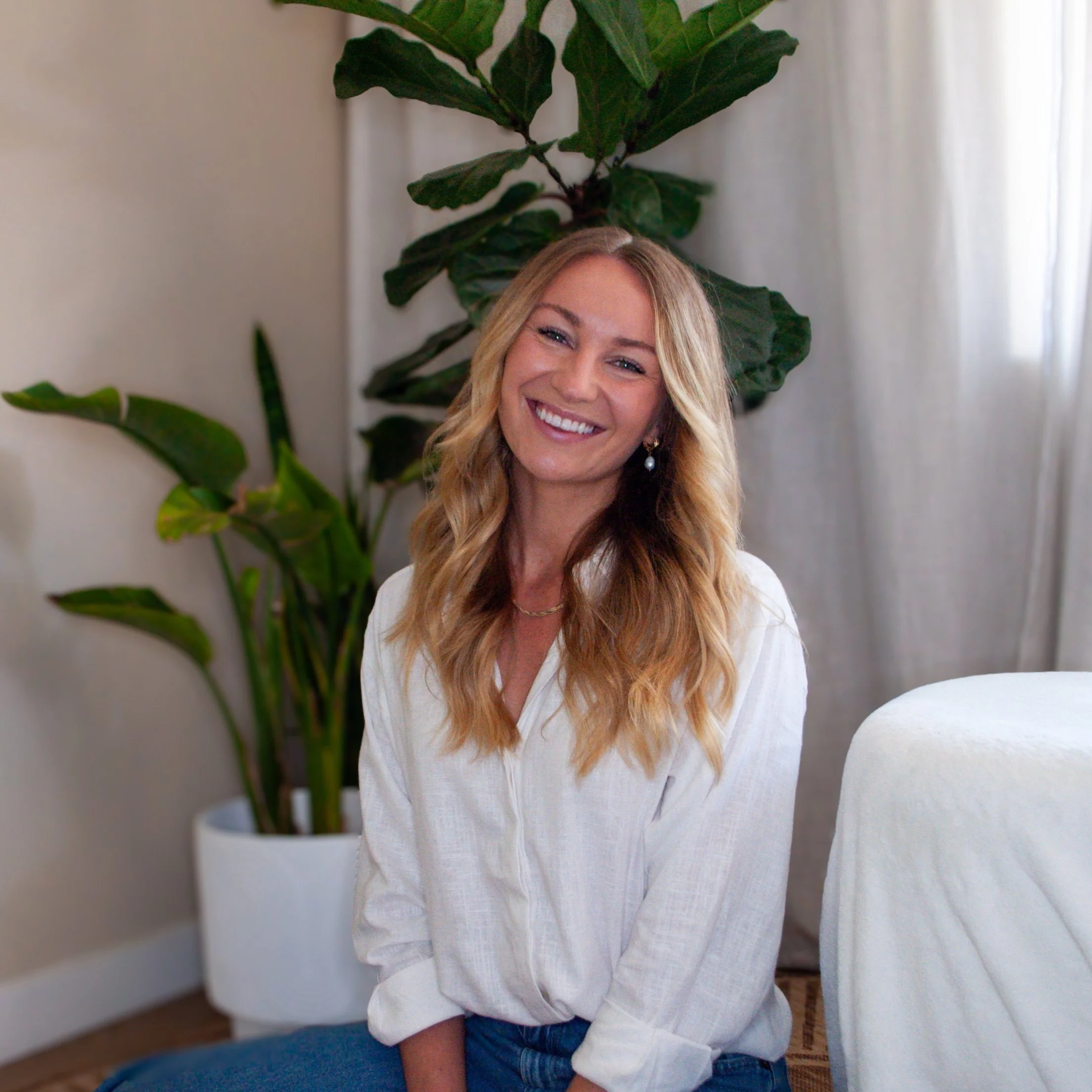
Aleah Maas is a Licensed Clinical Social Worker and relational trauma therapist based in San Diego, CA. She is the founder of Holistic Flow Therapy, where she specializes in helping adults heal anxious attachment, relational trauma, and complex PTSD. Using EMDR, Internal Family Systems (IFS), and attachment-based therapy, Aleah creates a safe relational space where clients can process early wounds, regulate their nervous systems, and build the secure attachment they deserve. She offers therapy online across California and in person in La Jolla.
